
Ask ten painters what ladder they reach for first and you’ll get at least three different answers, and most of them will be right, for the job they had in mind. Indoor trade work isn’t one task. Cutting in a cornice, skimming a stairwell void, and rolling a hallway ceiling all put different demands on a ladder, and the wrong choice doesn’t just slow you down, it’s the difference between working steadily off a flat, stable platform and balancing a paint tin on a rung while you reach further than you should.
This guide works through which ladder type actually suits painters, plasterers, and indoor trades, covering painters ladders, plasterers ladders, and the platform and dual-purpose ranges that get used across indoor trade work generally. If you’re still weighing up ladders generally, we’ve compared the fundamentals in extension vs platform step ladders elsewhere on the blog. This piece goes further into the indoor trade-specific end of that decision.

What Indoor Trade Work Actually Demands From a Ladder
Before getting into specific types, it’s worth being clear on what makes a good choice among indoor trade ladders, because painting and plastering work has a different set of priorities to general trade or warehouse use.
A stable, flat working surface
Painting and plastering both involve holding a tool, and often a tray, tin, or hawk, while working with your other hand for extended periods. A ladder that only offers a narrow rung to stand on and nowhere to rest equipment slows the work down and increases the temptation to overreach.
Repeated, short-duration repositioning
Unlike a single high-access job, cutting in a room’s cornice or rolling a ceiling means moving the ladder every metre or so. A ladder that’s quick to reposition, self-supporting, with no need to lean it against a wall and reset the angle each time, saves genuine time across a working day.
Floor protection
Indoor work usually means finished or soon-to-be-finished floors underneath you. Non-marking, stable feet matter more indoors than they do on a job site slab.
Manageable weight for room-to-room moves
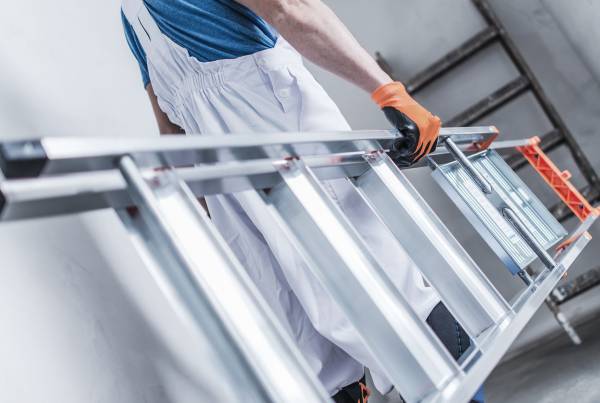
A ladder that’s being picked up and carried through doorways dozens of times a day needs to be light enough to move without becoming its own hazard.
Resistance to paint, plaster, and dust contamination
This is the one that gets overlooked. Rungs, locking mechanisms, and hinges that build up with dried paint or plaster dust don’t just look messy, they can affect grip and how reliably a locking mechanism engages, which is a genuine safety consideration covered further down.
Platform Step Ladders: The Standard Choice for Most Indoor Painting and Plastering
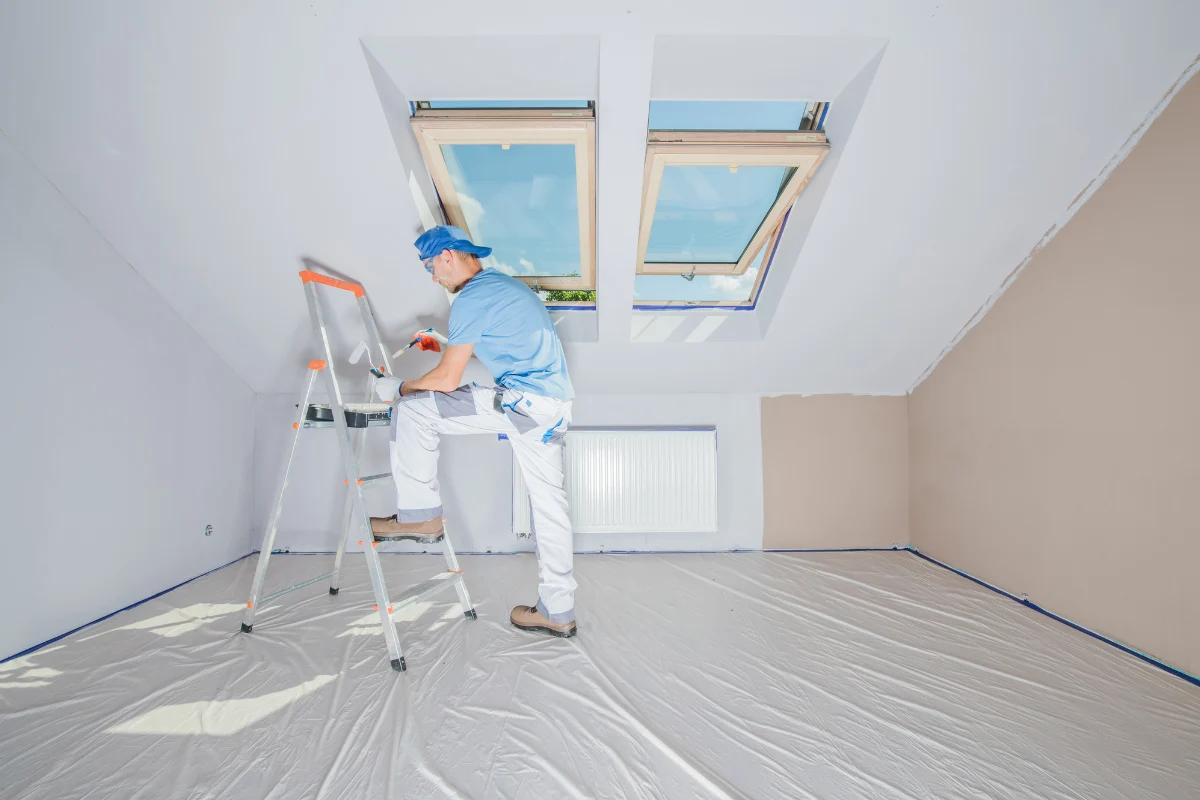
For the bulk of indoor wall, ceiling, and cornice work, platform ladders for painters are the standard answer, and for good reason. The flat platform top gives you somewhere to actually put a paint tray, roller, or hawk rather than balancing it on a rung, and because the ladder is self-supporting, it doesn’t need a wall to lean against, which matters when you’re working mid-room or repositioning constantly along a hallway.
Vetner’s platform step ladder range covers aluminium, fibreglass, and slimline options across the major brands. Aluminium is the common choice for general indoor painting and plastering, it’s light enough for constant repositioning. Fibreglass platform ladders cost more but are worth it specifically when you’re working near light fittings, switches, or any live wiring, since fibreglass doesn’t conduct electricity the way aluminium does. If you’re regularly in ceiling voids or near downlights during a renovation, that’s a genuine reason to choose fibreglass over aluminium rather than just a nice-to-have.
We’ve covered platform ladder-specific safety practice, correct locking, stabiliser use, and safe platform height, in more depth in our guide to using platform stepladders safely.

Where Extension Ladders Still Earn Their Place Indoors
Extension ladders are usually thought of as an outdoor tool, gutters, second-storey windows, roofline work, and for most indoor painting and plastering, they’re the wrong choice. But there’s one indoor scenario where they still make sense: double-height voids and stairwells, where the working height exceeds what a platform ladder or podium can safely reach and there’s a solid wall to lean against.
If you’re regularly quoting stairwell and void work, it’s worth having an aluminium extension ladder in the kit specifically for that scenario, alongside your platform ladder for everyday wall and ceiling work, rather than trying to make one ladder do both jobs. The angle and footing requirements for extension ladders are also stricter, covered in the compliance section below, which is worth factoring in before assuming an extension ladder is the simpler option.
Dual-Purpose and Multi-Position Ladders for Trades That Move Between Rooms and Roofline
Plasterers and painters working on new builds often move between purely indoor ceiling and wall work and eaves, soffits, or fascia touch-ups on the same job. A dual-purpose or multi-position ladder, one that converts between an A-frame step configuration and a straight or extension configuration, covers both without carrying two separate ladders on the van.
Vetner’s fibreglass dual-purpose range is a common choice here, combining the non-conductive benefit of fibreglass with the flexibility of a convertible design. We’ve gone into more detail on multi-position ladders specifically, including how Little Giant’s telescopic and hinge systems work, in our guide to multipurpose ladders for every trade. The trade-off is worth knowing upfront: multi-position ladders are heavier and cost more than a straightforward platform ladder, which only pays off if you genuinely use more than one configuration regularly rather than defaulting to it as an A-frame every time.
Telescopic Ladders for Tight Access and Van Storage
Where van space or tight indoor access is the constraint, rather than the work itself, a telescopic ladder is worth considering. Collapsed length is the main advantage, a telescopic ladder that extends to 3.9 metres can pack down to under a metre, which matters for anyone running a smaller van or working in apartment blocks with limited storage or lift access. They’re generally better suited to occasional higher-reach tasks than as your everyday platform for cutting-in work, since they don’t offer the same flat working surface.
Fibreglass or Aluminium: The Material Decision for Indoor Trade Ladders
This decision sits underneath most of the ladder type choices above, and it’s worth addressing directly.
Aluminium is lighter, generally less expensive, and perfectly adequate for the majority of indoor painting and plastering work where you’re not working near live electrics.
Fibreglass costs more and weighs more, but it’s the safer choice around any electrical hazard, downlights, switchboards, exposed wiring during a reno, and it also tends to hold up better to the chemical exposure that comes with some paint strippers and plaster additives, since fibreglass doesn’t degrade the way untreated timber or some plastics can with solvent contact.
Neither is universally “better.” The right call depends on how often your work brings you near electrical fittings and how much the extra weight and cost matters for your specific job mix.
Duty Ratings and Safety Compliance for Trade Ladders
This is where a lot of painters and plasterers, particularly those buying their own gear for the first time, get caught out. Ladders sold in Australia are classified by duty rating, and the classification actually matters for whether you can legally use that ladder for paid trade work.
Under the industry framework built around the AS/NZS 1892 series (Part 1 covers metal ladders, Part 2 timber, Part 3 reinforced plastic, and Part 5 covers selection, safe use and care), ladders fall into duty rating bands. According to Bailey Ladders’ own published guidance on load and duty ratings, a domestic-rated ladder is intended for light home use only and isn’t permitted in a workplace setting, regardless of how sturdy it feels. An industrial-rated ladder, suited to trade or serious handyman use, is the baseline for any paid work, and SafeWork NSW’s pocket guide to ladder safety confirms the practical threshold: a minimum load rating of 120kg is required for any ladder used in a workplace. Above that sits Industrial Heavy Duty/Professional rated equipment, commonly rated to 150kg, aimed at tradespeople carrying heavier tools, plaster, or materials up with them rather than working hands-free.
Two practical compliance points worth checking before you buy or before a ladder goes back into service after storage:
Check the compliance plate, not just the price tag
A domestic ladder can look identical to an industrial one on a shelf. The rated duty and load are printed on a compliance label on the ladder itself, and that’s the figure that matters for workplace use, not the description in a listing.
Extension ladder angle and footing
If you’re using an extension ladder for stairwell or void work as discussed above, SafeWork NSW’s guidance sets out the widely used 1-in-4 rule, the base of the ladder should sit roughly 1 metre out from the wall for every 4 metres of height, along with maintaining three points of contact at all times and securing the ladder at the top and bottom where possible.
For the full on-site safety checklist, positioning, inspection before use, and safe climbing practice, we’ve covered that in detail in our ladder safety guide for painters, which pairs well with the type-selection guidance here.
Ladder Maintenance Guide for Painters and Plasterers
General ladder maintenance advice applies to every trade, and we’ve covered the full routine, cleaning, storage, inspection checklists, and transport, in our ladder care and maintenance guide. Painters and plasterers have one maintenance issue that’s specific to the trade, though, and it’s worth calling out directly: paint and plaster buildup on rungs, hinges, and locking mechanisms.
Dried paint on a rung changes its grip texture, sometimes making it slicker, sometimes creating an uneven ridge that affects footing. Dried plaster or joint compound on a platform locking mechanism or spreader bar can stop it engaging fully, which is a genuine stability issue on a self-supporting platform ladder. A quick end-of-day routine, wiping down rungs, the platform surface, and hinge points before the material fully cures, prevents both problems and takes a fraction of the time that scraping dried paint or plaster off a locking mechanism does a week later.
It’s also worth checking rivets and hinge pins on platform and dual-purpose ladders more frequently than you might on a straight extension ladder, since the repeated folding and unfolding involved in room-to-room repositioning puts more cyclical wear on those joints than an extension ladder that’s set up once and left in place.
Replacement Parts Overview: Keeping a Trade Ladder in Service
A ladder used daily for indoor trade work will wear out specific parts well before the frame itself becomes unsafe, and replacing those parts is almost always more affordable and faster than replacing the whole ladder. We’ve covered which components wear fastest and why top ladder parts are most prone to damage; the short version for platform and dual-purpose ladders specifically is feet, hinges, and locking hardware.
Vetner’s ladder accessories and parts range covers replacement feet and boot kits, rope and pulley kits for extension ladders, platform safety gates, and stabiliser and leveller accessories, with kits specific to Bailey, Indalex, and Ladamax models. A few practical notes for painters and plasterers replacing parts:
Feet wear faster on painters ladders and plasterer ladders than on general trade ladders, simply because of the volume of repositioning involved in cutting-in and ceiling work. If a foot has gone hard, cracked, or is missing its tread pattern, replace it before it affects stability rather than waiting for it to fail outright.
Match the part kit to your exact model, not just the brand. Foot and boot kits are generally sized and shaped for a specific ladder range, Bailey alone stocks different kits for single-sided step ladders, double-sided and dual-purpose ladders, and Punchlock platform ladders, so check the model compatibility listed against the kit rather than assuming any “Bailey foot kit” will fit.
Locking gates and spreader hardware on platform ladders are safety components, not convenience features. If a platform’s locking gate or spreader bar isn’t engaging fully or has visible wear, that’s a replace-immediately situation rather than a “get to it later” one, given how much of a platform ladder’s stability depends on that mechanism locking out fully.
Repair or Replace? Common Ladder Repair Questions
Can a cracked ladder rail or stile be repaired?
No, not safely, and not in a way that restores the ladder’s original compliance. A crack in a stile or rail, aluminium or fibreglass, compromises the structural integrity of the whole ladder, and there’s no field repair that reliably restores that. A ladder with a cracked rail should be retired, not patched.
Can I replace ladder feet myself?
Yes, this is one of the more straightforward repairs. Foot and boot kits are designed for owner replacement, provided you match the kit to your specific ladder model and brand. If you’re unsure which kit fits, checking the model number against the compatibility listing, or contacting the supplier directly, is worth doing before ordering.
Are DIY ladder repairs compliant with AS/NZS 1892?
Manufacturer-supplied replacement parts fitted correctly, feet, rope kits, hinge hardware, generally maintain a ladder’s original rating, since they’re designed as like-for-like replacements. Structural repairs, welding a rail, re-riveting a stile, splicing a section, are a different matter and are not something that can be assumed to preserve the original compliance rating. When in doubt on a structural component, replacing the ladder is the safer path than attempting a repair that can’t be verified against the standard.
When should a ladder be retired rather than repaired?
Any visible crack in a rail or stile, a platform or spreader mechanism that no longer locks out fully, missing or illegible duty rating labels, or a ladder that’s been dropped from height or involved in an impact are all retirement triggers, regardless of how the ladder otherwise looks. Given how cheap a replacement foot kit or the ladder itself is next to the cost of a fall, this isn’t an area worth stretching the working life of equipment.
Do repairs or part replacements need to be logged anywhere?
For workplaces with a formal plant or equipment register, yes, ladder inspections and any part replacements are typically recorded as part of that register. For an individual tradesperson’s own kit, there’s no formal requirement, but keeping a simple record of when feet or other parts were last replaced makes it easier to judge when the next check is due.
A Note on Trestles for Continuous Ceiling and Wall Runs
For long, continuous runs, a full ceiling in one pass, or a stairwell wall that a single ladder position can’t cover efficiently, an adjustable painters’ trestle paired with a plank is worth considering alongside, or instead of, repeatedly repositioning a ladder. It’s not a replacement for a platform ladder in every scenario, but for jobs where you’re covering the same height across several linear metres, it can be faster and more stable than constant ladder moves.
Choosing With the Whole Job in Mind
The right ladder for painters, plasterers, and indoor trades isn’t a single answer, it’s a platform step ladder for most wall and ceiling work, an extension ladder kept in reserve for stairwells and voids, and possibly a dual-purpose or telescopic ladder if your job mix genuinely moves between indoor and roofline work. What matters more than the initial choice is keeping whichever ladder you land on properly rated for the work, clean of paint and plaster buildup, and fitted with parts replaced before they fail rather than after. If you’re weighing up specific models across Bailey, Gorilla, Indalex, Ladamax, or Little Giant for your next purchase, Vetner’s team can talk through which duty rating and configuration actually fits your day-to-day work rather than just the spec sheet.
Frequently Asked Questions
What's the best ladder for cutting in ceilings and cornices?
A platform step ladder is generally the best fit, the flat platform gives you somewhere to rest a brush, cutting-in tool, or small tray, and the self-supporting design suits the constant repositioning that cutting-in work involves.
Is fibreglass or aluminium better for indoor painting work?
Aluminium suits most general indoor painting and plastering. Fibreglass is the better choice specifically when you’re working near light fittings, switchboards, or exposed wiring, since it doesn’t conduct electricity.
What duty rating do I need for professional painting or plastering work?
An Industrial rating (120kg minimum) is the baseline required for any paid trade work in Australia. If you regularly carry heavier tools or materials with you, an Industrial Heavy Duty/Professional rated ladder (commonly 150kg) is worth the extra cost.
Can I use the same ladder for indoor and outdoor work?
A dual-purpose or multi-position ladder can cover both reasonably well, but a dedicated platform ladder for indoor work and a straight or extension ladder for exterior and roofline work will generally outperform a single do-everything ladder for each specific task.
How often should I check my ladder for wear if I use it daily?
Daily visual checks before use are standard practice, feet, locking mechanisms, and rungs are the parts worth looking at first. A more thorough inspection, covering rivets, hinge pins, and structural integrity, is worth doing weekly for a ladder in daily trade use, and immediately after any impact or drop.