
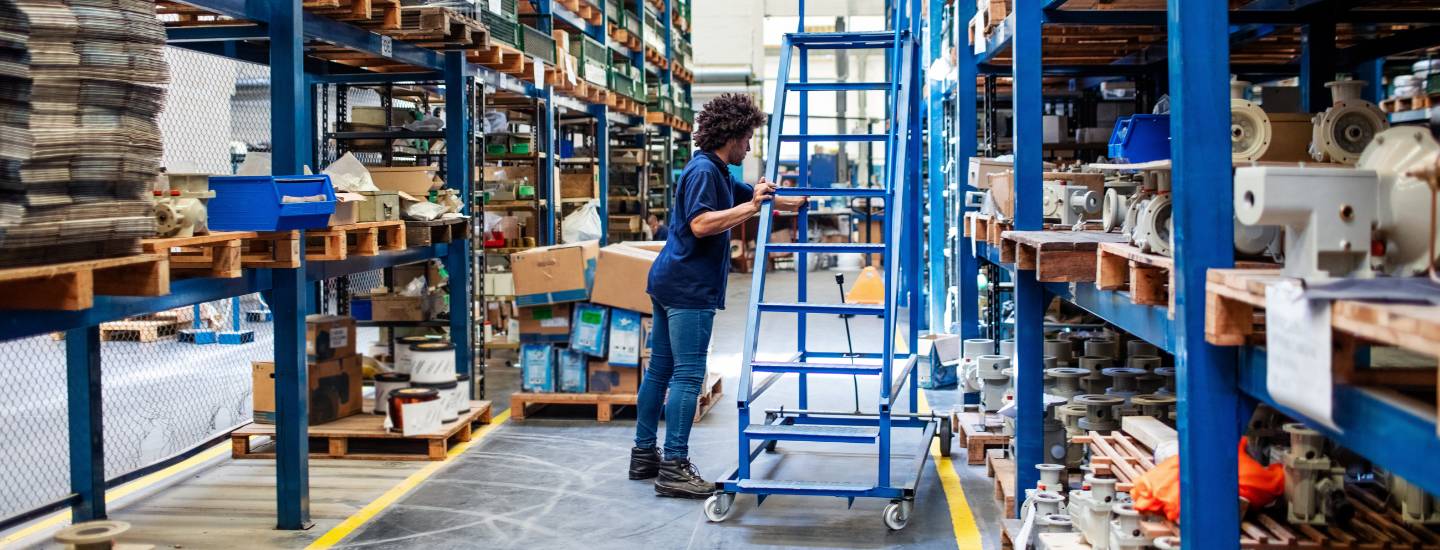
In a high-velocity logistics hub, commercial distribution centre, or manufacturing facility, vertical storage is the lifeblood of spatial efficiency. However, accessing those elevated pick locations quickly and safely introduces a major logistical variable. While traditional step and extension ladders have their place on a work site, high-frequency stockpicking demands specialised equipment designed to handle continuous cycles of ascending, descending, and handling heavy inventory.
Selecting the right warehouse platform ladders is not just a regulatory safety checkbox: it is a direct operational decision that impacts your picking cycle times, inventory flow, and floor space management. To build an efficient fleet, procurement managers must evaluate the mechanical, physical, and spatial factors that govern how these units operate in the real world.
The Spatial Mathematics of Narrow-Aisle Clearance
One of the most common procurement oversights when sourcing platform ladders for warehouse work is failing to cross-reference the base footprint of the ladder with the physical layout of your racking aisles.
While a wider lateral base profile provides exceptional physical stability, it also expands the structural footprint of the unit. In narrow-aisle configurations or facilities with tight turning circles, an oversized ladder can block stock trollies, restrict pedestrian traffic, or create severe collision hazards for forklift operators.
- Base Width to Height Ratios: As platform height increases, the base width and depth of the ladder must scale outward to maintain the structural centre of gravity.
- Aisle Compatibility: For standard aisles, a wider base is easily accommodated. However, for tight spaces, look for specialised, slimline industrial platform ladders that utilise deep, weighted baseplates or outriggers. This engineering design allows the ladder to maintain its lateral stability without taking up excess floor width.
Mobility Mechanics: Spring-Loaded Castors vs Lever-Activated Locks
If your pickers must constantly move their equipment down a 50-metre racking run, the physical mechanism used to roll and lock the ladder will directly dictate your facility’s picking speed and worker fatigue levels.
1. Spring-Loaded Castor Systems
These units feature spring-mounted wheels that keep the ladder elevated just above the floor when there is no payload.
- The Workflow: The worker simply pushes the lightweight aluminium platform ladder to the next bay. As soon as they step onto the first rung, the springs compress under their body weight, dropping the ladder’s solid rubber feet firmly onto the concrete floor to lock it in place.
- Best Suited For: Low to mid-height platform units (typically under 1.5 metres) where workers are carrying out rapid, lightweight stockpicking of smaller parts.
2. Manual Kick-Stop or Lever-Activated Wheels
For taller platforms, manual locking systems are the industry standard for securing high-level stability.
- The Workflow: These units utilise a central, foot-operated lever or hand-activated bar that lifts the locking feet off the ground and engages heavy-duty swivel wheels for easy manoeuvring. Once positioned, the operator disengages the lever to drop the steel base frame flat back onto the concrete.
- Best Suited For: High-reach industrial units (1.8 metres to over 3.0 metres) where workers remain at height for longer durations or are managing heavier, bulkier inventory loads.
Materials in High-Demand Duty Cycles: Aluminium vs Fibreglass
The raw environment of your facility dictates the physical construction materials required for your height-access assets.
- Aluminium for Weight Optimisation: For standard warehousing and stockroom inventory picking, high-tensile aluminium is the premier choice. It offers an exceptional strength-to-weight ratio, ensuring the ladder remains light enough for easy, manual repositioning by a single worker over an eight-hour shift.
- Fibreglass for Electrical Isolation: If your maintenance crews are working near electrical conduits, busways, or high-voltage overhead lighting, non-conductive fibreglass stiles are an essential structural requirement.
- Joint and Weld Integrity: High-frequency commercial environments subject ladders to continuous physical impacts from loading bays, pallets, and forklift brushes. Ensure your fleet features heavy-duty structural gusseting, fully welded steps, and heavy-gauge aluminium extrusions rather than basic domestic rivets, which can loosen over time under intense use.
Sourcing the Best Platform Ladders in Australia
To maintain peak operational uptime, your fleet should consist of reliable, field-tested equipment backed by proven Australian engineering. At Vetner, we stock the country’s leading trade manufacturers, allowing you to select the exact design parameters required for your specific workflow.
When evaluating the best platform ladders australia has to offer, we focus on three industry-leading brands:
- Gorilla Ladders: Renowned for their highly mobile, lightweight aluminium designs and compact folding mechanisms, making them ideal for multi-site operations and transport.
- Bailey Ladders: Offering advanced stability features and customisable tool trays that streamline picking tasks. Read our in-depth profile of this manufacturer in our dedicated Bailey ladders brand guide to learn more about their commercial configurations.
- Ladamax Ladders: Engineered with robust, fully welded aluminium profiles and solid safety gates designed for heavy industrial use.
For a broader operational comparison of these manufacturers, you can consult our comprehensive guide to the top ladder brands to find the best fit for your logistics requirements.
Optimising the Elevated Workstation
To maximise picking efficiency and reduce the need for workers to constantly climb up and down, modern platform units can be optioned with integrated accessories that turn a simple platform into a highly productive mobile workspace.
- Built-In Tool Trays and Cargo Holders: These keep barcode scanners, tape dispensers, markers, and box cutters immediately at hand, keeping the worker’s hands free to navigate the steps safely.
- Full-Enclosure Safety Gates: A self-closing safety gate or bar secures the picker within a complete 360-degree protective envelope, allowing them to use both hands to pull heavy or awkward boxes off high racking levels.
- Platform Extensions: For specialised tasks, wide-deck platforms provide extra room for placing picked boxes or toolboxes directly at the working level.
Build Your Warehouse Fleet with Vetner
Choosing the perfect platform asset is a balance of spatial planning, task frequency, and mobility mechanics. At Vetner, we help commercial enterprises, logistics hubs, and industrial workshops across Australia scale their operations with compliant, high-performance equipment.
Visit our physical showrooms in Brisbane South or the Sunshine Coast to physically test different castor and base-width configurations, or browse our online trade store for rapid, cost-effective delivery straight to your warehouse facility.
References
- Standards Australia: AS/NZS 1892.1: Portable Ladders Part 1: Metal & AS/NZS 1892.3: Portable Ladders Part 3: Reinforced Plastic (Fibreglass).
- Safe Work Australia: Managing the Risk of Falls at Workplaces Model Code of Practice & Warehouse Operations Guidelines.
- Vetner Industrial Equipment Database: Technical Specification Sheets, Castor Compression Metrics, and Base Footprint Data Sheets, Queensland, Australia.